image

Camera Lenses: a Crash Course

Version 1.0, © 2008 by Dale Cotton, all rights reserved

image

Fig. 1: Can't use that new camera without a lens!

Having used a little point & shoot camera for years, you've finally decided to purchase that high resolution dSLR you've been lusting after – but you need a lens to go with it or it won't do you much good. Most dSLRs optionally come with a "kit" lens ... are these any good? Part of the SLR concept is to allow interchangeable lenses; and each manufacturer has a bewildering selection of lenses to choose from. So what to do?
image

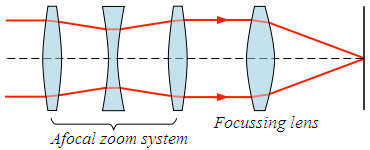
Fig. 2. schematic of a typical zoom lens (from Wikipedia)

A modern camera lens is actually an assemblage of multiple lenses called elements and housed in a barrel. It will also contain a diaphragm mechanism (see below) and often an internal auto focus motor and other electronics, not normally visible to the eye.

We won't be going into optical theory, but there's a lot more to know even about practical matters than meets the eye, so let's dig right in:

Note: No optical theory but we won't be able to avoid some elementary school arithmetic. Also: lenses are measured in millimeters (mm); and 1 inch = 25.4 millimeters, just to give you a sense of scale.

Focal lengths 1: the 35mm standard

Before digital most of us lived in a very simple lens world. We all used 35mm film and understood the significance of the 35mm focal length designations. We knew that:

  • 50mm is the "normal" focal length, meaning it's neither wide angle nor telephoto.
  • Any focal length shorter than 50mm is wide angle
  • Any focal length shorter than about 25mm is ultra wide angle;
  • Any focal length longer than 50mm is technically telephoto;
  • 85mm to 135mm is considered a portrait lens;
  • And anything longer than 135mm is what most people think of when they hear the term telephoto.
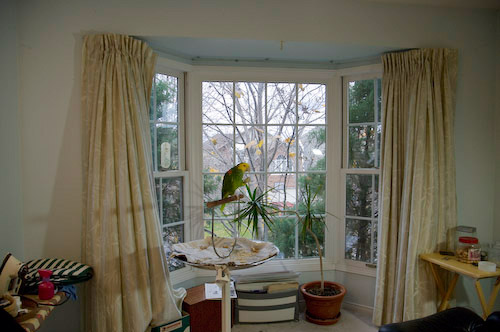
image image image

Fig. 3 Wide angle / normal / telephoto

Focal lengths 2: digital variations

Image

Fig. 4. Relative sensor sizes for some common digital camera formats

All this changed when digital came on the scene. The omnipresent compact digitals have a "normal" focal length about 1/5th or 1/6th that of 35mm, depending on the model. So 8 to 10mm (which was extreme telephoto for 35mm) is normal for that size camera. For example, the popular Canon Powershot A-series cameras, such as the Canon A720 IS have lenses with focal length ranges like 5.8mm to 34.8mm. This would go from ultra telephoto to moderate telephoto on a 35mm film camera, but on the A-series these focal lengths have the same reach as 35mm to a whopping 210mm on a 35mm camera. In fact, the actual 5.8 to 34.8 numbers are rarely used for such small cameras, while the 35mm to 210mm numbers are used instead with the understanding that these are the 35mm format equivalents.

The markings on the lens barrel of a Canon A720 say 5.8-34.8.
We know the conversion factor to 35mm is 6.
So 5.8mm x 6 = 35mm and 34.8 x 6 = 210mm.

The majority of dSLRs (often called APS-C or DX format cameras) have sensors that are 1/3 smaller than a 35mm film frame, and so have a 1/3 smaller normal focal length of 33mm. In practice this means multiplying the actual focal lengths on the lens by 1.5 in order to get the familiar 35mm equivalent values. For example, most APS-C format kit lenses seem to be 18-55mm zooms like the one the ecstatic young lady in Fig. 1 is using. On a 35mm camera this would be ultra-wide angle to normal, but because of the 1.5 multiplier, they are in fact the equivalent of 27-82mm.

The markings on the barrel of a typical kit zoom lens say 18-55mm
We know the conversion factor to 35mm is 1.5.
So 18mm x 1.5 = 27mm and 55mm x 1.5 = 82.5mm.

Many Canon dSLRs have a slightly smaller sensor, requiring that we use a 1.6 conversion factor, so an 18-55mm zoom would be a 29-88 equivalent lens. Olympus and Panasonic market cameras with even smaller sensors called 4/3rds and now micro 4/3rds, which have a simple 2x conversion factor. The kit lenses for 4/3rds have so far been 14-45mm, equating to 28-90mm.

Finally, dSLRs are becoming available in the original 35mm format, now often called full frame, or FF. On an FF camera, a 75mm lens is 75mm-e, no multiplier is required.

Note: Because of the complexity of having to re-think the practical meaning of a given focal length for each digital camera format, it is very common to talk about focal lengths in all formats in their 35mm format equivalent, unless the actual focal length is important. Mike Johnston introduced a useful shorthand for this, which I'll use here. I'll write mm-e when referring to the 35mm equivalent, for example: the 14-45mm kit lens for a 4/3rds camera would be 28-90mm-e.

Focal lengths 3: which to buy?

I mentioned that a typical kit zoom lens covers focal lengths from 27 to 82mm-e. This covers moderate wide angle, normal, and short telephoto up to the start of the portrait range. In other words this range covers all the most commonly used focal lengths, making such a lens the only one many people would ever need. Going wider than 27mm-e or so – into ultra-wide territory – introduces ever more of a peculiar fish eye distortion. It's interesting and novel but is ultimately a special effect.

Going longer than the portrait range of telephoto is useful for capturing subjects that one cannot easily get close to, such as birds in a tree or a building across a river ... or a politician surrounded by security. But there are several problems, or at least challenges. One is that the longer the focal length the more the slightest vibration is magnified, so a tripod or other support pretty much becomes a necessity. Another is that something called depth of field (DOF) becomes shallower the longer the focal length, and this means that less and less of the scene will be in focus. (Yes: shallow DOF can be considered a benefit rather than a liability in many cases, as we see in Fig. 5, below.) Yet another issue is that the familiar change in proportion of objects that are nearer or farther away is diminished. If we look at a receding line of telephone poles with the unaided eye, one that is twice the distance of another will appear up to half the size of the closer pole; but viewed through a telephoto lens this decrease in size will be less pronounced the longer the focal length being used.

image

Fig. 5. Hummingbird, Pentax K10D + 300mm, © Guyland Ziebert, 2008, all rights reserved

Given all the above, here are some of the most common applications for various focal lengths:

  • 5 – 25mm-e (ultra-wide angle): special effect and architectural interiors
  • 28 – 40mm-e (moderate wide angle): used to include a broad portion of the entire scene into a single picture; when the camera is close to the subject, such as in a crowd, creates a feeling of the viewer being in the midst of the action
  • 40 – 60mm-e (normal): used when the photographer wants the visual experience of the picture to match the unaided eye
  • 85 – 135mm-e (portrait): used for portraits and in general to concentrate attention on a single object (or group of objects) in the visual field
  • 135mm-e + (telephoto): used to reach far subjects.

image

Fig. 6. Autumn Island, Pentax K10D + 12-24mm, © Guyland Ziebert, 2008, all rights reserved

Landscape lens: A common question on photography forums is which focal length or lengths to buy for landscape photography. The answer is that all focal lengths can be put to use, but the range around normal, from very roughly 25mm-e to 100mm-e is going to cover a large majority of situations. Some landscape photographers tend to concentrate on the wide angles and some tend to concentrate on the portrait focal lengths, but most will use the wide angle to portrait range fairly evenly.

Zoom vs Prime

image

Fig 7. Two Nikon lenses: 35-70mm f/2.8 zoom and 28mm f/2.8 prime

A prime lens is one that offers only a single focal length, such as 35mm or 50mm or 500mm. Certain single focal lengths have become traditional for historical reasons from 35mm photography. Some of these are: 24mm, 28mm, 35mm, 50mm, 70mm, 75mm, 85mm, 90mm, 105mm, 135mm, 200mm, and 300mm. Until the second half of the 20th century, prime lenses were the only practical option, but once digital computers were enlisted in lens design it became possible for optical specialists to find acceptable solutions to the many issues involved in zoom lens design. Computer aided design especially helped by allowing designers to model the effects of using aspherical lens curvatures, opening up a new swath of solutions to these problems.

Nevertheless, zoom lenses still represent even more of a series of design compromises than primes, and especially so in the wide angle focal lengths for SLR cameras. Most lens manufacturers will offer a 28-200mm-e zoom due to consumer demand for an all-in-one solution, but no amount of computing power has ever solved all the problems inherent in such an extreme (7x) range of focal lengths, so these lenses invariably have optical problems. At the other extreme, I own a 35-70mm Nikon zoom (shown in Fig. 7) that has incredible sharpness and lack of distortions all across its range .. but then the range is only 2x and avoids the problematic wide angles beyond 35mm.

image

Fig. 8. Pancake prime lens – as small and light as one can get

In general a prime lens will provide the best optical performance possible at a given focal length. They also tend to be more compact and lighter than a typical zoom. The downside is obvious: being confined to a single focal length. This means:

  • Carrying the added weight of multiple lenses if multiple focal lengths will be needed.
  • Paying for multiple lenses if multiple focal lengths will be needed.
  • Swapping from one lens to another (and back again) when taking pictures in many situations.
  • Forgoing the exact focal length you require for a given composition, since that focal length may not even exist as a prime lens. Which in turn means shooting with the next wider focal length then cropping down the frame before printing, with a corresponding loss of resolution in the print.
Prime lens enthusiasts laugh when we make these complaints and tell us that these are the prices you pay for the ultimate in image quality. Maybe they have a point.

Apertures

image

Fig. 9. Aperture & diaphragm (at f/4) vs. pupil & iris

The human eye has a coloured iris that expands or contracts as the level of light brightness increases and decreases. The black "opening" of the eye at the centre of the iris is called the pupil. A camera lens is very similar: there is a diaphragm that expands and contracts much like the iris; and the aperture, which is the opening that light passes through to form an image on the sensor or in the view finder. However, the reason for expanding and contracting the size of the aperture is somewhat different for camera than for eye. We control aperture both to change depth of field (how much of the scene is sharp from closer to the camera to farther away) and as part of the process of controlling how short or long a period of time the picture will be taken within. Apertures are expressed as ratios of the lens focal length. An aperture of f/4 means that the diaphragm is constricted enough to leave an opening (aperture) that has a diameter that is 1/4 of the lens' focal length.

image

Fig. 10. 50mm prime circa 1970, with diaphragm at f/2, f/4, and f/8

Common aperture settings are f/1, f/1.4, f/2, f/2.8, f/4, f/5.6, f/8, f/11, f/16, f/22, f/32, and f/64. But every lens has a maximum aperture that the diaphragm can open up to, and f/1.4 is about the widest maximum aperture in commercial use (although occasionally you'll see an f/1.2). This maximum aperture is often called the lens' speed: a wider maximum aperture like f/2 being "faster" than a narrower maximum aperture like f/4. Nearly all lenses have their maximum aperture or apertures marked around the front element, along with the manufacturing company's name and the focal length or focal length range. At the top of the lens circle in Fig. 9 above, we see the maximum aperture is 1:4 (another way of expressing f/4); and the focal range is 17-70mm. In Fig. 10 we see the aperture marked as 1:1.4 and the (single) focal length as f = 50mm.

For technical reasons, the wider the maximum aperture the bigger and heavier the lens will be. Since lenses that go to a longer focal length, such as 200mm, will usually already have a longer barrel, and therefore be bigger and heftier than a shorter lens, such as a 50mm, the speed of lenses tends to be slower for longer focal lengths. So a 400mm prime lens will most likely have a maximum aperture of f/4, while a 35mm prime lens might very well have a maximum of f/2. On top of this, zoom lenses tend to be bigger and heavier than primes (since they have to cover a range of focal lengths), so zooms tend to be "slower" with maximum apertures like f/2.8 and f/4, even when the focal lengths are fairly short. For example, a typical professional zoom lens is the 24-70mm f/2.8. Such a lens will be a relatively modest 5 inches long but weigh 2 lbs (1 kg). This is often paired with the 70-200mm f/2.8, which is 8 inches long and weighs 3 lbs.

An advantage to faster lenses is that they let more light into the view finder, which makes composition and focus easier to perform in low light conditions, such as indoors or at twilight. This is one reason that photographers might favour a faster lens in spite its greater size, weight, and cost. Another reason is that faster lenses let more light reach the sensor when opened to their maximum apertures, making it possible to use a faster shutter speed and therefore to get an unblurred shot in dimmer light. Yet another is that faster lenses mean wider f-numbers mean more depth of field blur, which can be used to isolate the subject and obscure "unimportant" details, as in Fig. 5, above.

As we've seen, the standard APS-C format kit lens is an 18-55mm focal length zoom, but the other two numbers are usually f/3.5-f/5.6. These mean the widest aperture you can get (the lens speed) at the 18mm end is f/3.5 and the widest you can get at the 55mm end is f/5.6. Variable maximum apertures like that are most often seen in budget lenses, while the more expensive professional zoom lenses usually have a constant maximum aperture. Variable maximum apertures allow the designer to keep lens weight down to a minimum, which is a trade-off that's considered more acceptable to amateurs than to professionals. The main advantage today to having a constant maximum aperture is not that it is constant but that it doesn't go to an even smaller aperture at the longer focal length. So an 18-55mm lens with a constant f/4 max aperture means that you're not limited to f/5.6 at the 55mm end. From what I've read, in the past an even more important aspect of the constant aperture was that it simplified calculations you had to perform in your head when doing flash photography and deciding on exposures. Now the computer inside the camera does these things for us, so variable maximum aperture lenses, like f/3.5-f/5.6, are much more common.

Bokeh: Another aspect of apertures and diaphragms is something called bokeh (there's Mike Johnston again, who imported the term from the Japanese and added the odd "h" at the end to insure a two-syllable pronunciation). Bokeh is the on-purpose blurring of parts of a picture resulting from a shallow depth of field, which is achieved by using larger apertures, such as f/2 instead of narrower apertures, such as f/8. The background in hummingbird picture above (Fig.5) is an example of bokeh. The particular feel of the blur derives in some measure from the number of blades in the diaphragm. Bokeh is an advanced topic, but you'll come across the term again and again, so I mention it here.

Sharpness

image

Fig. 11. A traditional test chart for measuring lens resolution

Very few dSLRs are available as I write this with fewer than 10 megapixels, which is nearly twice the 6 megapixels considered high-end only a few years back. But if the lens on such a camera doesn't exactly focus the in-coming light onto the sensor, the resulting blur will lay all that potential resolution to waste. You may as well be shooting a lower model camera.

Because of the design compromises issue already mentioned, sharpness isn't a single fact about a lens. Lenses are sharper at the centre than the edges, are sharper at some apertures than other apertures, and in the case of zoom lenses are sharper at some focal lengths than at others. Most recent zoom lenses are sharp enough to support 10 megapixels (APS-C) at apertures around f/4 to f/8 in the centre of the lens and in the middle of their focal length range. So an 18-55mm kit lens will probably give sharp results and minimal distortion when used between f/4 and f/8 and between 24 and 45 mm, but it's unlikely to remain sharp and low-distortion at the extremes of focal length and at the widest apertures. (Also, the laws of physics degrade sharpness the more the aperture is reduced below f/8 (due to something called diffraction, so all lenses will show that effect.)

It's simply a fact that wide angles are more difficult to design for SLR cameras (because the focal length is shorter than the gap between lens and sensor), so the more extreme the wide angle the more likely sharpness will be poor and/or distortion will be strong. A modern zoom lens that stays away from the wider focal lengths and only covers a modest range of focal lengths may perform very nearly as well as a prime in the same range of focal lengths. But the more wide angle coverage is involved, the more likely the lens will have problems.

Distortions

image

Fig. 12. Barrel distortion causes seemingly bulging walls – beyond correction at ultra wide angles

image

Fig. 13. Zooming in on some chromatic aberration (worst case scenario)

As we've already seen, there is no such thing as a perfect lens. There are problems keeping the edges sharp at the same time the centre is sharp. There are problems with lenses keeping straight lines straight at the edges. There are problems keeping lenses from refracting colours, which causes a rainbow-like effect called chromatic aberration or CA. There are problems keeping light from reflecting off the glass surfaces inside the lens and fogging the image; this is called flare. When you have a zoom lens all these problems are multiplied by the need to keep the previous problems in check at multiple focal lengths.

Some distortions are more problematic for one type of photography than another. Lenses that cause straight lines to bow, as in Fig. 12, are a show-stopper for architectural photography. Chromatic aberrations are especially visible at an edge where something relatively dark meets a bright area, such as a mid-day sky. Flare is most likely to occur when the camera is pointed more or less toward the sun or other bright light.

For more diagrams and detail on the various types of lens distortion see: the Aberrations section in this Wikipedia entry.

Lens coatings: flare usually shows as a slight haze that reduces the contrast or punch of an image. Lens elements usually have a coating to reduce reflections and therefore to reduce flare. These coatings show as coloured reflections when you look into the lens at certain angles. In Fig. 7 above, you can see greenish and reddish reflections off the front elements of the two lenses. These result from the particular chemical formula or formulas of the coatings used.

Usability

Yet another design challenge for lenses is usability. The ultimate lens might be something like a 10-400mm-e f/1.4 zoom. So far as anyone knows it would be impossible to even design such a lens without atrocious optical problems like the ones just described. But even ignoring all that, the lens would probably weigh 10 lbs and totally dwarf the camera in size. So keeping a lens light enough in weight and small enough in size for general portability is yet another challenge, and the answer involves compromises none of us really like, including using plastics instead of metal for the housing, skimping on the tightness and smoothness of the way the lens feels as you turn the zoom and focus rings, and of course accepting a slower maximum aperture, as discussed above.

Weather sealing: I don't know how much it adds to weight, but another usability issue is weather sealing, meaning water-proofing. If you shoot outdoors in the rain or in significant spray, such as when rafting, you'll either need to buy a more expensive weather sealed lens, or tape a clear plastic bag around the barrel of the lens and the camera, leaving the front open. This is obviously going to be a nuisance if you have to rotate the zoom ring or focus ring on the barrel.

What to buy?

image

Fig. 14. It all comes down to capturing the moment

Now that you've plowed through all this detail (and it's only a decent beginning as to what there is to know) you have enough background to start thinking about what should be the first lens you're going to buy.

The obvious first choice has got to be the manufacturer's kit lens for the camera body you've opted for. The kit lens is rarely the best optical performer available, either in sharpness or lack of distortions. It was designed to be small, light, and inexpensive above all else, while still weighing in as optically decent, if not stellar. In fact, the manufacturer may well be taking a loss on it or barely breaking even. Given that the latest cameras are above 10 megapixels even at the entry end, the kit lens will probably not really do the camera justice, except perhaps at the middle apertures. But it takes the disciplined technique of an expert photographer to take advantage of a better lens; and that expert photographer may well own a kit lens to use when hiking or traveling and minimum weight overrides all other considerations.

There is an alternative approach that many serious photographers will recommend: buy a prime. We've looked at the merits of primes in size, weight, and optical goodness above. A prime enthusiast will urge you to buy a moderate wide angle or normal focal length prime, such as 35mm-e or 50mm-e, with your camera, then add more as time passes. You now know enough to understand the limitations of having just one focal length available, but it's also true that you can't take every picture in the world, and learning to make maximal use a single focal length can pay dividends down the road.

If you're buying the camera for a specific purpose, such as birding or sports or macro or astronomy, you may well have very specific advice from an expert in your area of interest. For bird photography, for example, you'd be hard-put to have a long enough lens, and you may have been urged to buy a 300mm or 400mm f/4. Don't hesitate to follow such advice. A kit lens is a general-purpose tool, not a be-all-and-end-all tool.

Further reading

Hopefully, the above has given you a good general idea of the things you need to know in order to make lens buying decisions. For more detail (mostly technical) here are some other pages available on the web:

1. Decoding those cryptic lens barrel markings:

2. Wikipedia and Camerapedia lens entries:

3. Cambridge in Colour article on lenses and optics:

4. More about depth of field:


doc doc doc doc